Sunday, November 3, 2013

Data Structures

What exactly are data structures? To most outside the profession in computer science or engineering and some field of biology, a solid knowledge of what data structures are is rare to find. That's why it can be a great benefit to have a broad understanding of the concept, what it entails, and why it is relevant in today's age.

Simply put, data structures are systems or methods of data organization in computers in such a way as to make that data easy to access and be stored efficiently.

For large companies that deal with extremely large amounts of data as well as sensitive and private data, we can see that the ways in which data is stored becomes a very valued area of development and interest for them. For financial institutions private customer data like account information, credit card numbers, and records must be managed efficiently and safely.

Data structures are based on a very basic principle or stored at specific addresses in the computer and accessible data in the forms of integers or strings, that is letters, through RAM or a computer's capacity to handle data. That data is then manipulated by a set of written procedures in order for the user to achieve their desired objective.


Sunday, October 27, 2013

Hacking - Example: NSA


What exactly entails the term, computer hacking? At the beginning of the internet and computer revolution, there was only a vague understanding of what it meant. But, as the internet and computer has become more and more integrated into everyday life, awareness has increased much more so than before. However, there are still many unclear specifications about hacking that have yet to become common knowledge.

Computer hacking is the exploitation of a computer, computer system, network, (and surprisingly also classified) or human error, that allows the hacker to gain illegally accessed privileges, sensitive information, or money.

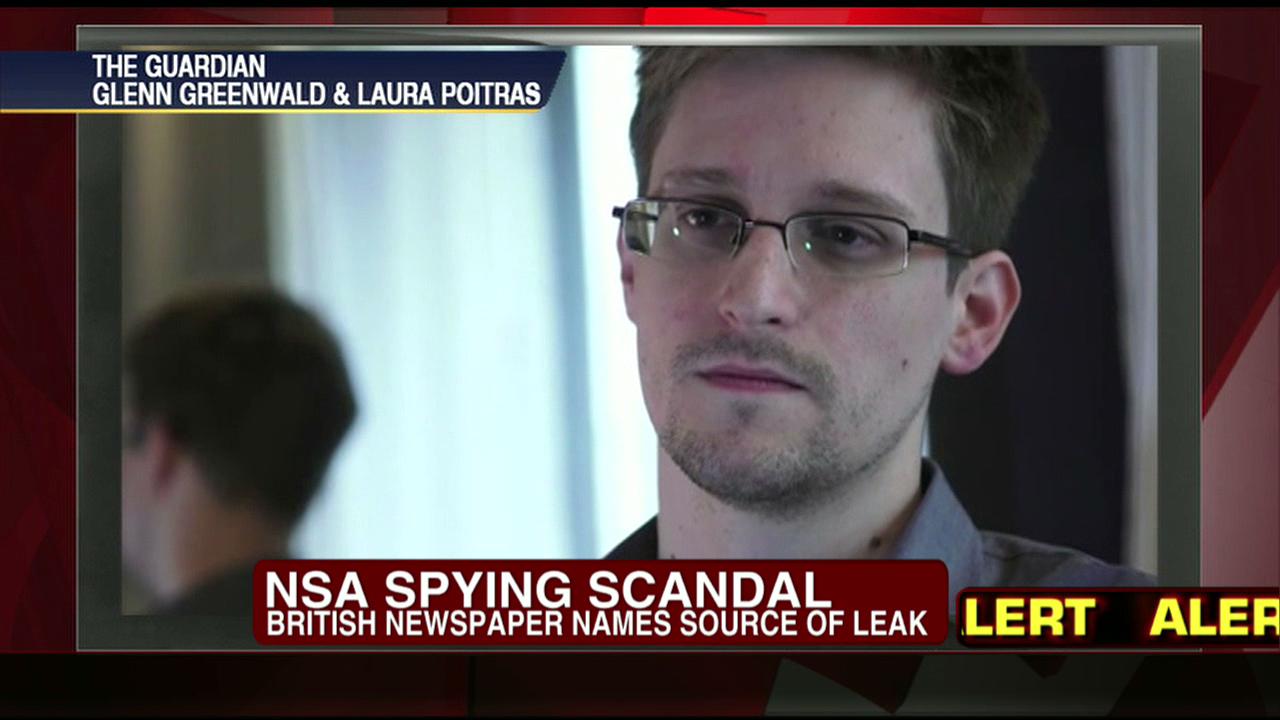
Hacking has a very ugly side that most people did not realize until recent events; that is in reference to the revelation of severe violations of privacy invaded by the National Security Agency (NSA) which was shed light upon by one of the agency's contractors Edward Snowden. The revelation that the NSA had vastly superior hacking methods and technologies absolutely threw the world, and I mean the entire world, into chaos. Even now, upon further review of the secrets Snowden revealed through over the 200,000 documents that he leaked is still causing uproar.

Hacking is a dangerous tool if one is capable of it. 


http://hacking-computers.com/what-is-computer-hacking/
http://www.huffingtonpost.com/2013/11/14/nsa-snowden-documents_n_4276708.html

Sunday, October 13, 2013

Open Source: Sharing is Awesome!

It is my personal belief that code should be free to access for all, naturally there may be some exceptions such as security and finance, but other than those exceptions free code for all promotes a public that is more eager to learn how to code and use that code beneficially.

Free source code is simple known as Open Source and code that is not readily available to the public is called Closed Source. Open Source gives all users free license and does not require any paid fees to use their software and it is great for group collaborative efforts or projects that are team developed. Free code is great for providing code already created and preventing time spent on redundant coding.

However, there are some pitfalls of Open Source. Namely in its greatest benefit of providing free code is that those that wish malicious intent can use that free code to better understand how to get through security loop holes of that code or create viruses and malware intended to wreak havoc.

Despite the having the lower end of security as opposed to Closed Source code, Open source is great when it comes to having users come together and collaborate on development teams, forums on the internet, threads targeted and solving problems. Open Source simply promotes group development, research, and collaboration thus resulting in greater discovery and development.

I am pro Open Source all the way!


http://opensource.org/


Sunday, October 6, 2013

What is Agile and What Can It Be Used For?

Agile is a set of software development methodologies that broke from the old tradition of how software developers dealt with their clients which did not leave much room for creativity and subsequently led to customers not receiving their product exactly as they wanted or envisioned.

In Agile what is valued are interactions between the developer and customer, having an actual working product to show the customer as a prototype rather than having documentation of what the product does, providing room to change the product even late in the development stage which allows for greater creative potential, having a team of coordinated, cooperative, and excellent members to produce a simple yet effective product.

While the name Agile is thrown a lot, it is often accompanied by the word "Scrum". What exactly is Scrum?
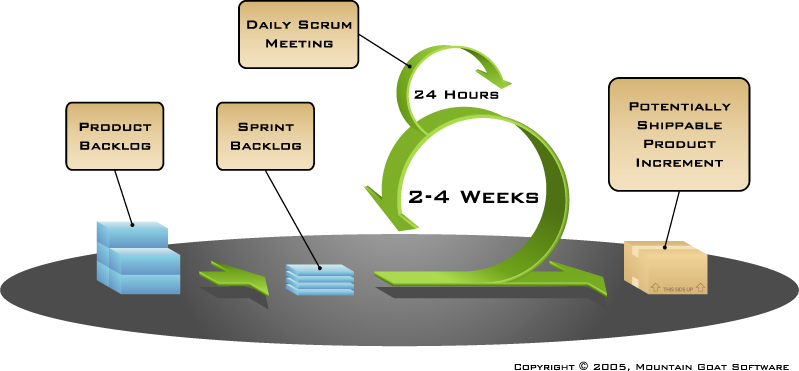
Scrum is an aspect of Agile that puts the methodologies of Agile into action that has its own methodologies that improve the team development process of projects and gets the customer much more involved in the process which helps both the developing team to more effective understand what the client wants and thus for the client to receive a product that is much more aligned to their interests.


The Scrum process is most well known for its division of the development process which is called, Sprints. Each sprint delivers an achievable goal within the specified time of the Sprint and allows for changes in development.

Overall Agile and Scrum are effective methods that allow the software developers and their clients to meet with one another to better help each other create an effective product whereas in past methodologies the client and development team would have had extremely limited interaction.

https://drive.google.com/#folders/0B9EFnnfOcvqFdTBUNTNvc3VFNEE

Friday, September 20, 2013

LinkedIn and Branding: Networking and Selling Your Skillset

Imagine yourself as a fresh college graduate having just entered the job market in search of a place to put your skill set to use. However, after several months of searching, no job offers can be seen on the horizon. You wonder to yourself why is that?

Unfortunately this is a case all too common for fresh college graduates. Many fall into the dangerous idea that upon graduation from college, bountiful amazing job offers will just fall from the sky into their laps. The truth, however, is not so pleasant. Opportunities come not just from having a college degree and proof of a marketable skill set, but also the networking that is created during college.

One way to create that network is to actively market yourself. What does that mean? It simply means to let business and companies know that you are on the job market and are providing for them your experience and skills. What makes this different from job hunting? It means that you are marketing yourself as a brand, meaning that you are selling yourself as a unique employee.


And the best place to do that currently, is through the online website: LinkedIn.com. On LinkedIn many mid to top level jobs are offered there and profiles of other job seekers are available to help yourself improve on your own profile. It also provides the opportunity to get into contact with potential employers and also groups with similar backgrounds, simply an effective way to network online.

https://drive.google.com/#folders/0B9EFnnfOcvqFS3VtRy1xc0NXZVk

Friday, September 13, 2013

QR Codes, What Are They?

Ever see those pixellated squares randomly littered in odd places as you walk through your city? In actuality, those pixellated squares are a type of barcode originating from Japan, QR being an acronymn for Quick Response. These 2D barcodes can contain URLs, tracking or contact information.

In order to put a URL into a QR code, the URL must first be made into a shortened URL which can be done through http://goo.gl/ which is a URL shortener provided by Google. Then take that shortened and paste it into http://qrcode.kaywa.com/ which will embed that URL into a unique QR code.

The utility of QR codes come several utilities. First, from its ability to be scanned by smart phones with QR code scanning software used through it's camera (most smartphones phones, if not all, are QR code software compatible) so long as that phone has wireless internet or 3G or 4G internet. QR codes also have the ability in them to be customizable into images to better represent a business or brand.

QR codes are widely used in Japan and their use is rising in Europe. However, the level of QR code use is not large as the barcode.


https://docs.google.com/file/d/0B9EFnnfOcvqFUkFVeU9NTEVrM2M/edit

https://docs.google.com/file/d/0B9EFnnfOcvqFYlZKdV9KOFBpQWs/edit

Friday, September 6, 2013

Social Networking Security in Business Promotion: Secure or Fallible?

In today's modern era dominated by the advent of the internet, social media has become a powerful tool in which businesses can promote their services and their brands. However, due to the staggering amount of use social media has generated from business and personal accounts, it has made itself a prime target for those seeking to maliciously gain private information. Such people who attempt to gain restricted information are called phishers. Confidential and personal information stored on social media accounts are valuable targets to phishers because that information may be linked to other accounts which might have financial information and resources.

There are several methods in which phishers attempt to obtain information from social media users. They range from spam emails containing bogus links or false information trying to get the user to unknowingly divulge information. There are also spam app or game invites or fake game related lures like "CHEATS!". Other schemes try to falsely get the user to give their information through fake
login screens.
Don't get hooked!

In response to the danger of virtual identity theft, all users including businesses should be more careful when interacting online. The first and most effective way to safeguard personal information is to simply have a keen eye and avoid all scams. Phishing scams usually all have similar language, for example "This really works! I tested it myself! Just click the link ######.com and you'll get it free!" or they usually try to trick with popups declaring your computer is in danger. If recognizing phishing attempts is a bit harder for you, then setting safeguards is the next best thing. Some tips suggest that you do not have the same password for all of your accounts, create unique passwords with special characters and numbers and store them in the website that can only be accessed through security questions. An effective way to keep information off unwanted hands is to always go to the security settings of whichever website you're on and change the settings to be off limits to unknown persons and inaccessible to the general public, only acquaintances. Safe websites will always include "https://...." with the "s" standing for secure. Other traditional methods include up-to-date security software on your computer and running regular scans for phishing software.

The internet has become an integral and powerful tool in today's modern world. However, it does not come without its dangers, which in the case of social media refer to phishing scams.